

Presentation
Keynote Address
From the 2024 National Conference
Published Fall 2025 | Added November 11, 2025
A transcription of Ruth Alperson’s Keynote Address from the 2024 DSA National Conference in Oberlin, OH, upon the receipt of the DSA Lifetime Achievement Award.
I do have people to thank. I’m here because of them. We’re all here because of them, [the] people who organized for us. And I do want to thank Greg Ristow. I was a student here (I graduated from here) and the Oberlin College Choir was one of the great choirs in the US and still is. And I’m so proud of Greg for being the director. It’s just wonderful what you’ve accomplished here. I want thank Alex Marthaler for being so gracious all the time and always helping me out of a jam, which usually had to do with something technical. And Lori Forden, who’s chair of the Board of Trustees. I call Lori quite a bit.
I’m very happy to be here with all of you.
My Introduction to Dalcroze
This is such a special discipline that we share. I’m very grateful to be teaching Dalcroze. I have been a learner. My Dalcroze career began here, when I was a senior. I had been in the conservatory as a piano performance major, and then I switched into the college as a music major in my senior year. I needed a two-credit course, and I looked in the catalog and it said Eurhythmics, which wasn’t very well known, but when I inquired about it, I found out you better get in there quickly because it closes out every year and they let seniors in first, and you’re a senior. So I was the last one. And it changed my life.
I found myself in a class that was nothing like what I had expected. When I walked in the eurhythmics room, I was greeted by the teacher Inda Howland. She had on a very colorful, chic dress. Her braid wound around her head. She had very active eyes. And she was barefoot. And I was so excited because one of the things I loved best to do, when I was a kid, when everybody was out of the house, I would put my favorite records on the record player, you know, pile them up, turn the volume up as far as it would go, and I would dance around the house to the music. And I remember going through the kitchen and the things that were hanging up would touch each other and make sounds. And I thought, you know, they’re celebrating with me. And I loved that. And then here I am back in class at Oberlin, in college, where we’re doing just that. When I saw the bare feet though, I thought, This is gonna be great.

All of us were seniors. We were directed by Inda to leave our coats and shoes and socks in the cloakroom. So nothing was on the floor; no backpacks. It was completely clear. All there was in the room was a Steinway grand piano, a stereo system, a little table, and there was a chalkboard. The first thing we did was sit in a circle, and we were already kind of terrified of her. [The below picture from the Oberlin College Archives is nothing like she was; it’s very mild.] She was a bear. She was very strong, very opinionated, and we all loved this. She was also such a fine musician.
We each had a beautiful drum, with animal-skin heads and a long wood shell behind that you hugged under one arm. We were sitting in a circle. And I look around, and what I see are toes. I’ve been here three and a half years, and I’ve never seen toes in a class. And you know, my hopes were just very high at that point.
So there we were, sitting in the circle. Inda has a drum, and she starts moving. Without making a sound, it was a pulse, it was a tempo. And I noticed that everybody’s moving. You could see that. Everybody was moving their heads, flexing their feet, and then I realized, so was I. So we’re already feeling and internalizing the temple she’s giving. And then she said, “We’re going to pass around the beat.” And then she made the first sound, which was absolutely beautiful, and she passed it to the person next to her. I was so excited, I thought, “This is like going back to the beginning of music, I’ve never done this before in my life.” It was thrilling. But we couldn’t do it. We couldn’t pass the beat around. People were a little nervous and they’d come in too quickly, or the sound wouldn’t travel. So here we were, senior year performance majors, and we couldn’t pass around the drum beat. That was the first day of eurhythmics class.
And we found it was that way all the way through. We were mistaken to think that some of this work was going to be easy. Some of it was simple, but it wasn’t easy. And after that we did more movement standing up, moving around, never technically difficult movement, but movement in the service of music.

Staff File (Inda Howland), Alumni & Development Records, © Oberlin College Archives
Inda Howland (1907-1984) was a eurhythmics and music theory teacher. She learned to play piano as a child, and, as a young adult, worked as a pianist for a local movie theater where played in accompaniment to the silent movies the theater shows. She later moved to New York City with her mother and studied under James Friskin at the Institute of Musical Art, which became the Juilliard School. To continue her training, Howland moved to Geneva, Switzerland to study under Émile Jaques-Dalcroze. She entered the Institute Jaques-Dalcroze in 1932 and graduated in 1934 with a certificate and a diploma, as the first woman to graduate from the school. In 1940, Howland became the instructor of eurhythmics and music theory at Oberlin College, where she taught until 1974. The Inda S. Howland Prize for Excellence in Teaching was established in her memory and is awarded every three years to an exceptional woman on the Oberlin College faculty.
Inda Howland
Inda was the first American woman to get the diplôme from Geneva. She studied with Émile Jaques-Dalcroze for two years. Her mother lived with her in Geneva, because women in that age didn’t travel alone like that. When she came back, she used a lot of the techniques that she had learned at the Institut [Jaques-Dalcroze], but as time went on, she changed some of the approaches. For example, she didn’t use any arm-beats after a while. She dispensed with those. Now, she was a dancer and a choreographer, and so she was very aware of forms. And what was important was that in the end she did everything her way, which was absolutely identifiable as the Dalcroze eurhythmics class. It was like a lot of the other classes I have taken, but she integrated a lot of what she was doing in her life into the classes. So she kept changing what she was doing.
At one point I was just so taken with her teaching and wanted to plumb the depths of this. And I decided I would go meet a man named Roy Wickson. Roy was an organ student here, but he became like a son to Inda. He eventually became a lawyer and they remained very close. He was the executor of her will, and he was her sole heir, so he had all her stuff, drums and all kinds of items. What I wanted to look at most of all was the little notes. The book Inda Howland always had on the piano shelf [desk?] for every lesson: a three-ring binder with these little pages that were lined. That’s what I wanted to look at. What did she write in those plans?
So when I saw Roy he had boxes of things and he said, “What would you like to see?” and I said, “Do you have her plans? Do you have those little notebooks? And he said, “No.” He said she burned them. That at the end of every school year, she had a ritual bonfire, and she threw in anything she wouldn’t need in the future. Every year she threw away her notes. And I think that attests to the fact that she kept changing and doing things differently.
She took a sabbatical in Southeast Asia, where she studied gamelan in Bali, and she studied dance in Thailand. She studied with master teachers, and when she came back, she integrated a lot of that into her lessons here. So she was constantly using new ideas and changing her lessons. There are so many stories about her. I told you we were kind of scared of her, and that never went away. It was the kind of reverence for this teacher who had such a big presence, who was demanding of us because she was of herself.
We all came to class one day. She’d never been absent, and she wasn’t there. And we just went to the cloakroom, and took our shoes and socks off, we left our coats there, and we sat in the circle. With our toes wiggling. And we waited. She appeared the doorway, just her head, and she said, “A bug is in the room. It’s purple and has blue dots on it. There it is!” We watched that bug come into the room, and whoops—up the wall to the ceiling quickly, then crossed the ceiling, then down quickly . . . I don’t know how long we followed that bug; it went all over the place. It hid under the piano and we waited for it. It hid under the stereo and we waited for it to come out. And finally, it ran out of the room. Inda stood up, went to the doorway, and turned back and looked at us. And she said, “and that is how you have to listen to music.” And then she walked away.
This is an important story because that was her goal in working with us, that we had an unbroken listening to the music that we never stopped. And the kinds of work we did was work that held us in the grip of the music.

Arm Swings
I mentioned she didn’t use arm-beats, that she just didn’t like them because they were the same all the time. She was a dancer and she wanted arms to be free. So she devised a way of moving with the music with our arms. And she called it the swings. They were swings, but they were done in a particular way. We had to start with momentum here, and they continue . . . and more momentum here, there, and across. At Carnegie Mellon, many years ago, she participated in a summer conference, and what did she do for an entire week with the class? Swings. I was mortified because we had worked on it here in our classes and thought, this is not for a summer conference. And some of the participants started looking at each other because she was doing swings, then swings the second day, and even day three. But the way it paid off was that finally, the last day, she had people swing with particular recordings she brought in. We did so much listening, and the swings helped us understand the music—and listen to it—while we were moving. It wasn’t so technically involved, it was just swinging with the music: with the energy, with the articulation, and so on. (Um, and in fact, you’re gonna do an exercise using swings before I’m finished.)
What the swings allowed us to do was participate physically in understanding being with the music. So we were swinging along with the music. Whatever we heard, we swung; we could move our feet, we could move on the floor. This was a way of analyzing it in a non-cerebral way. A way of analyzing using body movement, and I loved that.
She was teaching mostly performance majors—people going into music professionally—whereas all my eurhythmics experience after Inda was geared to teaching, especially teaching eurhythmics classes. I wanted to be able to do that, but I think in working with performers, she had other issues in mind. And one big issue for performers is interpretation. So a very crucial part of the study was we would move to a piece that Casals would play and then move to the same piece that another cellist would play. We heard Wanda Landowska, Glenn Gould—and I don’t remember the third pianist—play the same Bach prelude and fugue. And we moved to that.
And if, I hope we have time, because I have two different interpretations of the song.
I do want to mention something about the swings that summer I was just telling you about. She brought in a piece for us to move to: the violin sonata by [Antonio Pietro da Bergamo] Locatelli in F minor, the slow movement, which is very slow, very sad, very beautiful, and lasts for thirteen minutes. And she set up a “V” formation on the stage: two people at the wide end of the “V” would swing the beats . . . and the two people next to them would swing the measure . . . and the two people next to them would swing the phrase . . . and the person at the apex, the last person, would swing the entire piece, thirteen minutes. And that person is here. Jack, I don’t know how you did it. I thought I’d never forget that . . . and I never did . . . and here we are.

Final Examinations
I want to tell you about her final exams. I should tell you is that one of the most beautiful experiences I had as a student of Inda Howland was watching her move. I’m getting goose bumps right now. Her movement was exquisite. And whenever we saw her move, we’d be speechless. So our final exam was: Each one of us would play a piece, and she would go down the hallway all the way to the end. I remember we were all sitting against a certain wall, and one member of the group was the lookout, who would communicate with us and tell Inda when the first person (a flutist) was ready to play. And then we heard Inda yell, “Pull me in!” So the flutist started to play and we would wait. And it was beautiful. She played Syrinx by Debussy, and Inda appeared at the door, moving, into the room, with the music. She moved with the piece till the end. And it was another memorable moment in my education. Each of us played for her, and she did the same thing.
I remember there were two times she did not appear in the doorway. And she used that as a teaching and a learning experience: We talked about it. She never wanted to humiliate anybody or punish anybody. So each of them had a chance to do it again, to learn about why she didn’t appear, why she didn’t feel “pulled in.” She talked a lot about the nature of music in terms of forces, what she called magnetic forces. She talked about how the music “wants to go,” or it “doesn’t want to go.” (I think the dancers who are here know exactly what that’s about.)
Movement Exercise
She had us do an exercise where we moved through air, through the room . . . and when she clapped her hands, it turned to water. And the next time she clapped her hands, it was mud, and then it was walls, and then it was stone. We worked with that a lot. One great exercise was when she designated portions of the room: “When you go through here, it’s air; when you go through here, it’s water; when you go through there,” and so on. What was very exciting was to be moving through air while the people on the other side were moving through stone (at the same time). And she did a lot of work like that, with tension, articulation, energy, and with other qualities in music. And this was all translated to us beautifully through her designs.
[At this point, Dr. Alperson invites audience members on stage for a movement exercise, using the “swing” to illustrate issues of phrasing, touch, buoyancy, and interpretation.]
Closing Thoughts
Something I want to include, that I didn’t realize then, that taking just one semester with her would lead to five decades of study and a career in eurhythmics. And I just love being here. Thank you so much. Thank you.
Editor’s note: This article was transcribed and edited by Aaron Butler.
Submit Feedback on This Resource

Ruth Alperson
Ruth Alperson (BA Music, Oberlin College; piano, Emil Danenburg; harpsichord, David Boe.) Eurhythmics classes with Inda Howland at Oberlin inspired Ruth to pursue studies in the discipline, the beginning of a lifelong journey. She studied at the Dalcroze School of Music, New York City, and the Dalcroze Teachers Training Course in London, England. Studies at the Institut Jaques-Dalcroze culminated in being awarded the diplôme supérieur. Ruth earned her PhD in arts and humanities at New York University. Ruth’s doctoral dissertation was titled “A Qualitative Study of Dalcroze Eurhythmics Classes for Adults.” She has held the following titles: Dean, the Hoff-Barthelson Music School in Scarsdale, NY, Director of Studies of the Dalcroze Teacher Training Program; faculty, the Dalcroze Program at the Diller-Quaile School of Music; member, Scientific Committee of the International Con ference of Dalcroze Studies (ICDS); DSA Board of Trustees, member of the governance committee. Ruth taught for many summers at the Dalcroze Institute at Longy, where she learned from brilliant Dalcroze teacher, friend, and mentor Lisa Parker.
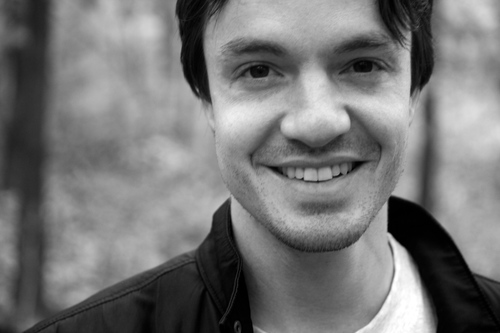
Aaron Butler
Aaron Butler is an active musical director, accompanist, and teacher in New York City. He is a specialist in Dalcroze Eurhythmics, a musical director for Mind The Art Entertainment, and is a founding member of Sound Narcissist. He is comfortable in a variety of musical styles—from baroque through contemporary classical, opera, Broadway, and improvisation. Faculty: Lucy Moses School, Bloomingdale School of Music. M.M. (piano), Longy School of Music; Dalcroze Certificate & License, Longy School of Music; Artist’s Diploma, Brandeis University; B.A. (Music and Physics), Amherst College. Piano with Lois Shapiro, Lanfranco Marcelletti; Dalcroze with Lisa parker, Anne Farber, Ruth Alperson; Figured Bass with Frances Conover Fitch, Peter Sykes. More information at aaronplayspiano.com
About the Author(s)
Ruth Alperson
Ruth Alperson (BA Music, Oberlin College; piano, Emil Danenburg; harpsichord, David Boe.) Eurhythmics classes with Inda Howland at Oberlin inspired Ruth to pursue studies in the discipline, the beginning of a lifelong journey. She studied at the Dalcroze School of Music, New York City, and the Dalcroze Teachers Training Cou…
Aaron Butler
Aaron Butler is an active musical director, accompanist, and teacher in New York City. He is a specialist in Dalcroze Eurhythmics, a musical director for Mind The Art Entertainment, and is a founding member of Sound Narcissist. He is comfortable in a variety of musical styles—from baroque through contemporary classical, op…


Leave a Reply
You must be logged in to post a comment.