

Review
Book Review
“Make It Music” by Anthony Molinaro and Stephen Neely
Published Spring 2025 | Added August 3, 2025
Dalcrozians love to learn through games; it is one of the joys of this work to experience music in a playful manner! Anthony Molinaro and Dr. Stephen Neely have used this idea to their advantage in one of the most exciting Dalcroze resources I’ve yet encountered: a multilayered card game that inspires Dalcrozian activities, along with an accompanying book explaining the rules of the cards.

Make It Music: Dalcroze Strategies for Every Classroom is loosely designed as a “choose your own adventure” lesson for Dalcroze pedagogy. There are four decks of cards, each corresponding to a different step in the process of an unfolding activity. From the starter deck, one selects a card that asks you to make a certain movement or gesture (for example, “alternate taking two steps with clapping twice”). The second deck asks you to “make it music,” with ideas for musical accompaniment (e.g., “establish a meter” or “ask your students to chant along with their movements”). Once your students can coordinate the opening gestures to music or rhythm, the third deck, called “Challenge,” adds a layer of difficulty or interest (like “imagine the intensity of fire” or “turn it into an obstacle course”).
The accompanying book explains the many ways one can play the cards and reminds us that there can be several interpretations for each card combination. Or, the authors write, you can simply change cards if a certain combination just doesn’t make sense. There are no wrong answers, but the way to win this game is to try to build a successful activity with a minimum of card swapping.
This book will appeal to classroom music teachers looking for new inspiration. (Anthony Molinaro can be considered one of the foremost in public school Dalcroze educators currently working in the field.) There are sections dedicated to the challenges of working within an administration, having to fulfill clear teaching objectives, working in a crowded classroom environment, and discussions on the merits of bare feet. Sometimes the authors seem overly apologetic about pushing Dalcroze education onto general music teachers. At first glance, this population seems to be for whom the book was written.

Through the lens of a private Dalcroze educator, the applications that this resource can yield, especially in Dalcroze teacher-training, are tremendous. Firstly, the card decks could be incredibly useful in a Dalcroze pedagogy session, where one could invite students to build Dalcroze activities from the ground up. Many of us are trained to teach by first identifying a musical concept (e.g., simple triple meter) and then devising games and movements to embody the concept (waltzing, conducting in 3, etc.). The usage of these cards aims to flip that process around: Here, one starts with a silent movement or gesture and then ties it to music. This could be a very interesting way for those training to become Dalcroze teachers to explore how Dalcroze pedagogy can work in a nonlinear fashion. It asks us to make music to accompany the gesture, rather than finding a gesture to embody the music.
In addition to its usefulness in exploring pedagogy, these cards could make for interesting sessions in improvisation. Using the starter deck alone (one card reads “walk then reverse on command”) can give the budding improviser lots of material to invent at the instrument.
For a veteran Dalcroze teacher, these decks can inspire new ideas and break one out of teaching ruts. As a type A personality who likes to plan every minute detail of my classes, the idea of using these three decks in a live class (which is suggested by the authors) sounds a bit scary, to say the least. I feel safest when I have a carefully sequenced lesson plan that leads to an end goal. If I were to play these cards in a live class, I’d be throwing sequencing (and caution) out the window and improvising along with my students. However, teaching in this way can relate to several of the Dalcroze principles, including adaptation and improvisation—teaching who is in front of you and guiding them as they need.

The three opening decks of cards are wonderful assets in and of themselves. But what really makes this resource special, in my opinion, is the fourth card deck, “Teaching Artist.” In the book, the authors make the case that Dalcrozians are not simply teachers; we are crafting lessons with sensitivity and professionalism, and we should identify our work as artistry. The cards in the teaching artist deck are not necessarily meant to be added alongside the other three but instead are intentions one can set in or before a teaching moment. These cards are poignant, reflective, and powerful. Reading through them makes me feel recognized by members of the Dalcroze community for going through the same struggles we all have. “Ignore the perceived opinions from the other side of the door.” “Find a moment of inner calm.” “Slow down; it is not a race.” When I attended a session on this new resource at the dsa’s 2024 National Conference at Oberlin, the card I drew from this deck actually made me feel strong emotions: “Trust this version of yourself.”
I’d recommend every Dalcroze teacher or professional student grab a copy of this book and these cards. The joy of the challenges within these cards will no doubt inspire you to try new things and grow as a teacher, whether that’s in letting go of your lesson plan, giving you new prompts with which to improvise, or helping remind you about the beauty in doing this work, even when it’s hard.
Submit Feedback on This Resource
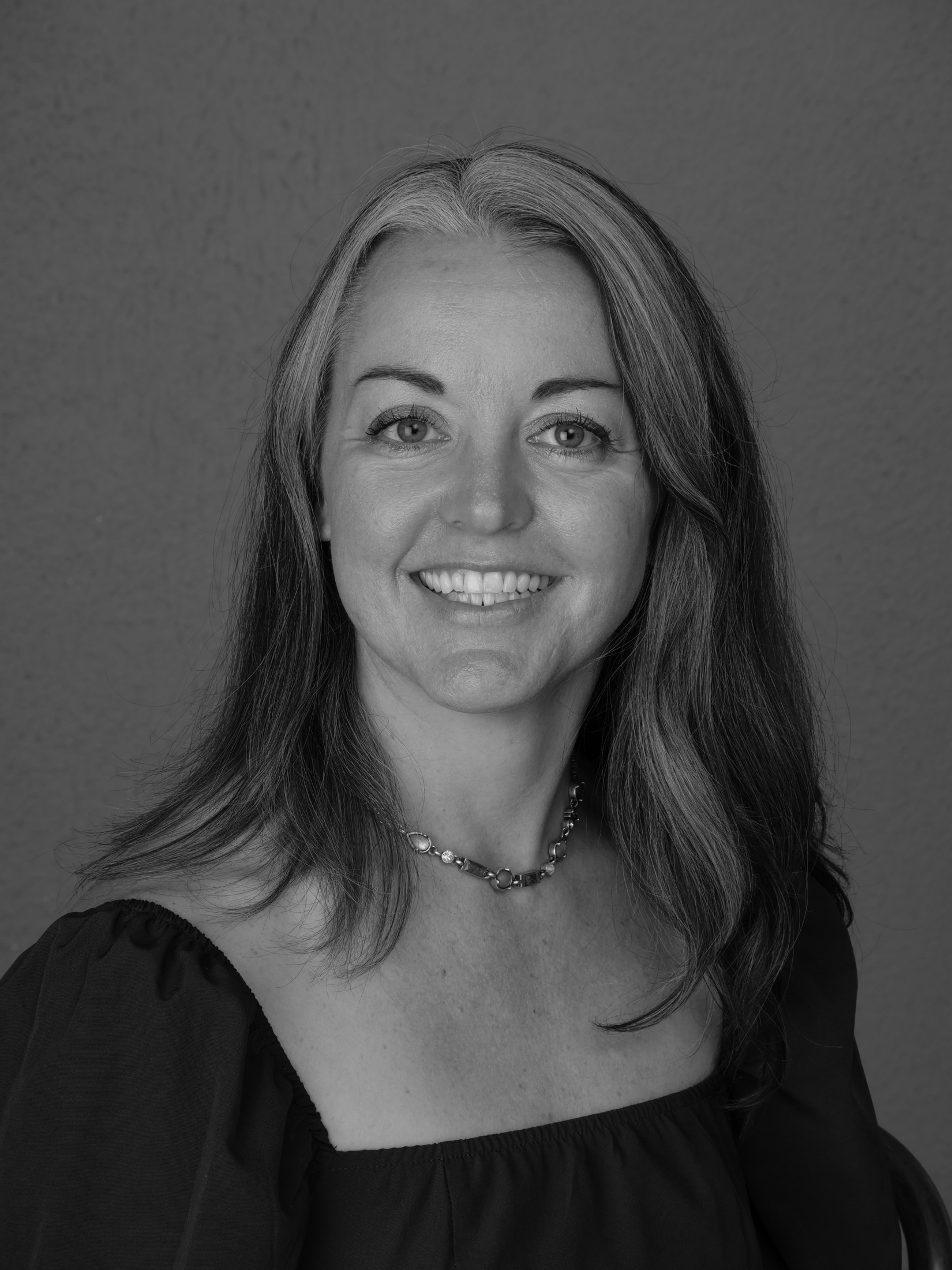
Katie Couch
Katie Couch holds degrees in music performance and education from the University of Colorado Boulder. She earned the Dalcroze Professional Certificate and License from the Dalcroze School of the Rockies (now the Dalcroze School of Music and Movement). Katie is on the faculty of the Dalcroze School of Music and Movement, where she trains future Dalcroze teachers in improvisation, solfège, and pedagogy. Katie also volunteers for several committees of the Dalcroze Society of America, most notably serving as treasurer, chair of the publications committee, and managing editor of Dalcroze Connections.
About the Author(s)
Katie Couch
Katie Couch holds degrees in music performance and education from the University of Colorado Boulder. She earned the Dalcroze Professional Certificate and License from the Dalcroze School of the Rockies (now the Dalcroze School of Music and Movement). Katie is on the faculty of the Dalcroze School of Music and Movement, whe…


Leave a Reply
You must be logged in to post a comment.