

Interview
Celebrating 10 Years of “Dalcroze Connections”
Published Fall 2025 | Added November 11, 2025
Editor Katie Couch sits down to interview William R. Bauer and Michael Joviala to look back on the history of the flagship publications from the Dalcroze Society of America.
Launched in fall 2015, Dalcroze Connections has served as the flagship publication of the Dalcroze Society of America for nearly a decade. In celebration of its tenth volume, managing editor Katie Couch interviews William R. Bauer and Michael Joviala, exploring the magazine’s history, its purpose, and the community it continues to inspire.
Katie Couch
Can you give me the history of the DSA’s publications?
Michael Joviala
My understanding is that it did start with a newsletter.
Bill Bauer
They called it the Dalcroze Society of America Newsletter. I can help out with a little bit of history, because I’ve actually done some research.
The name Elsa Findlay is familiar to all of us, but little do we know what a quiet force she was for pulling together the community that was basically exiled from Dalcroze teacher training by Hilda Schuster and Jaques-Dalcroze himself in the 1940s. Elsa Findlay was instrumental in another society that existed and predated the Dalcroze Society of America called the Association of Dalcroze Teachers in America, the ADTA. In a recent chapter I wrote for the book Mapping Dalcroze I go into a little bit of the history of the organization, but the key thing here is that they didn’t really have much of a publication. I think they did have something of a newsletter. We have a few copies of it and proceedings from a conference that they had in December of 1940. What happened, basically, was that Jaques-Dalcroze gave Hilda Schuster sole permission to run Dalcroze teacher-training in the United States, in the entire country, out of the Dalcroze School of Music in New York City.
There were many, many of his former students in the United States, including Elsa Findlay, Henrietta Rosenstrauch, among others—a real “who’s who” that were part of this organization, the ADTA. And they all were working in various contexts, but they could not do teacher-training.
So, after Jaques-Dalcroze died in 1950, there was a period when the Dalcroze School of Music was the only game in town. But by the mid-60s, other programs started to say, “Hey, what about us? Can’t we teach Dalcroze teachers?” And the Institute [Jaques-Dalcroze] was actually open to the idea.
The Cleveland Institute of Music got permission to offer Dalcroze teacher-training. Carnegie Mellon University, which had been offering Dalcroze classes since 1921, also began offering teacher-training in the mid-1960s. Art Becknell’s dissertation includes chapters on each of these key developments in the practice. They include the correspondence between the respective administrations and the IJD. Hilda basically hit the roof and said [in effect], they’re betraying Jaques-Dalcroze’s intentions; they’re also violating a contract that I had with the Institute itself, as indicated by these two signed letters from Jaques-Dalcroze. And so on the one hand, we have these upstart training programs seeking legitimacy and on the other we have Hilda Schuster claiming she was the only legitimate teacher.
And so the Dalcroze Newsletter/American Dalcroze Journal grew out of the efforts to build a community outside of the officially endorsed teacher-training. And it really started to take shape at the end of the 60s. There was a Pan-American conference that had teachers from Latin America and other countries, and that was the beginnings of the Dalcroze Society of America.
Michael Joviala
To this day, some people still think of the magazine as a newsletter. And, we should say—this might not be obvious to the kids—it came in the mail!
Bill Bauer
Right! The earliest newsletter I have (thanks to Julia Schnebly-Black, who bequeathed her collection to me) is from 1976, but there are some that go back earlier. And, of course, it corresponds to the formation of the DSA. I think the newsletter began in the mid-70s, maybe even ’72, depending on how far back you dig.
The American Dalcroze Journal
Michael Joviala
So the newsletter morphed into the American Dalcroze Journal at some point. Do we know when?
Bill Bauer
Well, the earliest newsletter I have is volume 3, number 2 from 1976. In the fall of 1981, the look changed. They began using yellow paper. This is starting to resemble more of what we came to know as the American Dalcroze Journal, even though it’s still very much newsletter-ish. It seems to me that when there is a change in leadership, very often that inspires a change in the look and the feel of the publication.
In the 90s, we changed the look to what really became the American Dalcroze Journal. The first glossy issue may have appeared in 1990. It starts to look like a magazine now.
[Editor’s note: the earliest edition we can find is vol. 3, no. 1 and is available for all to peruse in the new Resource Library.]
Michael Joviala
And they started to add cover art, slowly giving it a more professional look.

Vol. 3 No. 1 – 1976

Vol. 14 No. 1 – Fall 1986

Vol. 30 No. 1 – Fall 2003

Vol. 41 No. 1 — Fall/Winter 2014
Bill Bauer
As far as notable past editors of the DSA publications, we have to name Anne Farber. She was a persnickety curmudgeon when it came to writing. She brought the writing to a high standard, and she held everybody else who edited during her reign to that same high standard.
Michael Joviala
Absolutely! Anything I showed her, she would insist on sitting down with me, and going over it line by line. “Nope, cross that out. See, now, that needs to be moved. Oh, and that’s just nonsense. Why would you say it like that?”
Bill Bauer
Yes, she was very precise, and she had a great mind for editing.
Michael Joviala
In addition to all the other things she taught me, she actually taught me how to edit.
Bill Bauer
I think Julia Schnebly-Black was president for a while, and she also oversaw some of the publication.
Michael Joviala
That was part of the president’s job, wasn’t it? The president was the editor of the newsletter. Eventually I inherited the editor position from Kathy Thomsen, even though I was not the president of the DSA. I was afraid to take the job, but eventually you persuaded me, Bill!
Bill Bauer
Well, you’re very committed to the community, and so you realized that this was one way you could do due diligence on its behalf.
Michael Joviala
That’s kind. I was afraid of not knowing what I’m doing, and that turned out to be true! I learned on the job. We also asked Aaron Butler to help. He was very helpful as the co-editor. I remember our first couple of issues we had some challenging articles to edit. I had never edited anything except my own writing!
Bill Bauer
I believe it was 2016 when the first issue of Dalcroze Connections was released, as that corresponded to the report on the conference at Princeton that year.
Michael Joviala
And that was a point at which you were radically reshaping the structure of the DSA. And I think we were trying to grow the organization into a real professional support organization. We wanted to mark that change by reshaping the magazine so it would reflect that.
Bill Bauer
Yes. Also, coming out of academia and having published in academic journals, I was very aware that the American Dalcroze Journal was striving to be at least two things at once, if not more. It was striving to be a trade journal for practitioners—in which you got recipes of how to do this, that, and the other thing. And then, periodically, you’d have this amazing piece of scholarship by someone like Selma Odom that elevated it to a completely different realm.
All these things were mixed, and that was part of its charm. But I thought, given that we were reshaping the organization, maybe we could also create two different publications: one that met the needs of the community of practitioners, and the other that really put our stake out in academic credibility.
Michael Joviala
However, when we explored this, we were advised that if we did this we would not have had credibility for any research-related findings, because we were the Dalcroze Society of America. I can say that happily, FIER (the International Federation of Eurhythmics Teachers) has now taken that up. Andrew Davidson has taken over the editorship, and now it has a walled-off, peer-reviewed section. They’ve really taken that on, which I’m happy about.
Bill Bauer
Yes, and I guess we could have solved it that way too—just cordoning off an area of the American Dalcroze Journal and saying, “This is our peer-reviewed section.” In retrospect, I realize that there are lots of journals that display conflicts of interest and still purport to be somewhat scholarly. Many are not peer-reviewed, but even some of the peer-reviewed ones show all sorts of biases. I think we could have done it, but you and I both had aspirations to do something of high integrity, academically and intellectually. This threw a monkey wrench in our aspirations.
Michael Joviala
And we were just too busy.
Bill Bauer
It was daunting. We did make a few passes at it—we even tried to organize a scholarly conference that would have kicked off the journal.

Dalcroze Connections
Katie Couch
So was the main idea of Dalcroze Connections that it be mostly for practitioners?
Bill Bauer
Yes, although Michael had this pragmatic idea that, because we upgraded the look of it, it could also step into the realm of the coffee-table book. People might look at it and say, “Oh, Dalcroze—what’s that?”
Michael Joviala
I always imagined sending it out to music schools, just blanketing them with an issue once to see what would happen.
Bill Bauer
I think a lot of them wouldn’t know what to make of it. That’s where the scholarly journal might have come in—to say, “Oh, there’s actually some intellectual credibility to this stuff these crazy teachers are doing.”


Michael Joviala
If you look at the first few issues of Dalcroze Connections, they’re kind of embarrassing. It looked like I made it in my basement.
Bill Bauer
It did have a kind of rough-hewn, raw quality. Emily Raively used to do the graphic design for the American Dalcroze Journal.
Michael Joviala
Yes, she was great.
Bill Bauer
She should get a footnote—good yeoman service at a very low rate, often on short notice. But when we switched to the new format, Melissa Neely stepped in as graphic designer, and that’s when it really started to gain the vibe it has now. Now the DSA’s executive director, Alex Marthaler, has taken on her role.


Michael Joviala
Right. Alex built on what Melissa started for us. It looks great now. Katie, wouldn’t you agree?
Katie Couch
Yes! My concern is that as things get more digitized, we’re not printing as many copies. People don’t get to flip through them, and yet they’re so attractive.
Michael Joviala
We’ve also done some pretty innovative things recently. With the help of Elda Nelly Treviño, we put out two Latin American issues, each in both English and Spanish. That was a big deal. Elda also pushed us to get an ISBN number, making it more attractive for those in academia to submit articles. Those things really helped it rise to another level.


Bill Bauer
Yes, and those articles were quite scholarly.
Michael Joviala
Well, another thing we’ve tried to do in conjunction with the DSA’s Professional Development Committee is to solicit articles on Dalcroze teaching strategies and techniques from leading practitioners. I always think about future generations: If our teachers and their teachers had done that, we’d have a really rich library. We do have many valuable articles from them, but now we’re trying to be more conscientious in how we organize, archive, and keep it useful for teaching.
Katie Couch
Or for people learning how to teach. My focus lately has been designing Dalcroze Connections for those I meet in the summer training programs—people coming in who need current, modern resources.


Michael Joviala
It’s been great for that. Katie has been an excellent editor. Far better than I ever was. You have a vision and you’re super organized. The magazine really blossomed under your leadership. Between you and Alex, who automated so many things and really keeps us on track for the production, we’ve come a long way.
We also have to acknowledge, in addition to all the people on the committee, Michelle Li, who does our copy editing. She is actually a professional copy editor as well as a Dalcroze teacher.
Katie Couch
She is another key member of our committee! I have one final question: How do you see the future of publications for the DSA as the world modernizes?

Michael Joviala
I will just say that I hope that the magazine continues, because it is a permanent record. Everything on the website will disappear like sand, but the magazine, even in PDF form, will remain. Somebody a hundred years from now will be able to know what we were doing and thinking about. They won’t know that from the website, which is being changed this very minute. So, I hope that it continues.
Bill Bauer
It seems to me that we could leverage multimedia production more than we do. We haven’t really, I think, sunk our teeth into that and given thought to how even just offering a definition of a single term could come to life with video and audio and interactive functions. I mean, time, space, energy—a video of people working with balls, you know. It would make it super obvious to people.
Katie Couch
Okay, thanks everybody for this conversation!
Bill Bauer
My pleasure!
Michael Joviala
Likewise, and congrats to Dalcroze Connections on ten great years. Here’s to the next ten!
Submit Feedback on This Resource
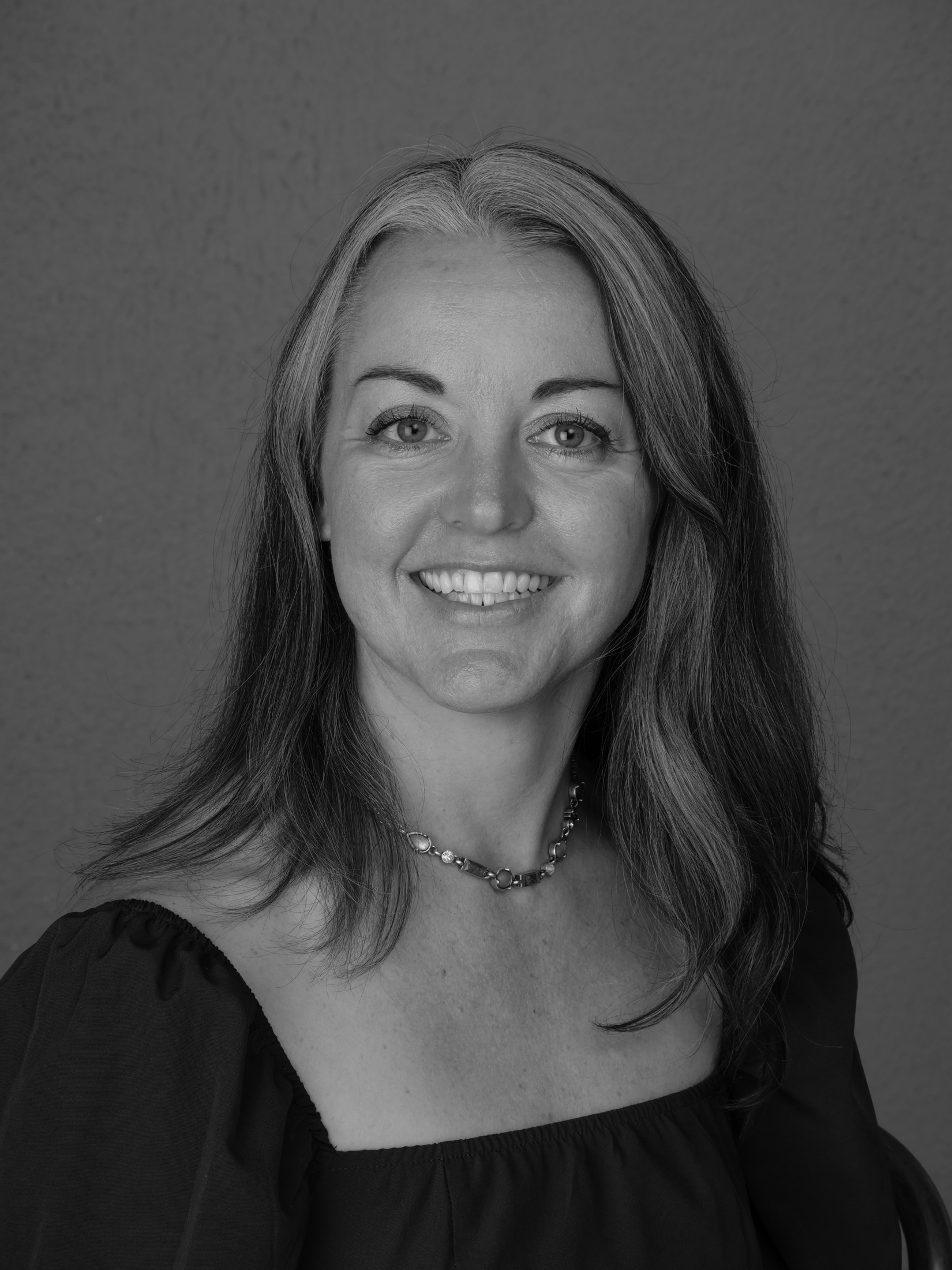
Katie Couch
Katie Couch holds degrees in music performance and education from the University of Colorado Boulder. She earned the Dalcroze Professional Certificate and License from the Dalcroze School of the Rockies (now the Dalcroze School of Music and Movement). Katie is on the faculty of the Dalcroze School of Music and Movement, where she trains future Dalcroze teachers in improvisation, solfège, and pedagogy. Katie also volunteers for several committees of the Dalcroze Society of America, most notably serving as treasurer, chair of the publications committee, and managing editor of Dalcroze Connections.

William R. Bauer
William R. Bauer teaches at the College of Staten Island/CUNY, where he has served on the full-time music faculty since 2002. This year, he was appointed Music Program Coordinator, having served as director of American Studies for the preceding seven years. Dr. Bauer earned his Dalcroze certificate in 1983 and his Dalcroze license in 1990 in studies with Robert Abramson and Ruth Alperson. As president of the Dalcroze Society of America (2012–2018) and executive director (2018–2020) he worked to bring American Dalcroze teachers together as a professional community. In June 2023, he earned the diplôme supérieur at the Institut Jaques-Dalcroze in Geneva, Switzerland. The research he presents here will appear in the forthcoming book, Mapping Dalcroze.

Michael Joviala
Michael Joviala is a composer/improviser/performer and educator in New York City. In 2020, he earned the diplôme supérieur from the Institut Jaques-Dalcroze in Geneva and is the director of the Dalcroze Teacher Training Program at the Lucy Moses School in New York. He teaches Dalcroze eurhythmics to students of all ages at the Lucy Moses School of Music, the Diller-Quaile School of Music, the Dalcroze School of Music and Movement in Dallas, Texas, and in workshops worldwide. He is the creator and music director of the improvising music and dance ensemble, Locomotors. He has called Brooklyn, New York, home since 1992.
About the Author(s)
Katie Couch
Katie Couch holds degrees in music performance and education from the University of Colorado Boulder. She earned the Dalcroze Professional Certificate and License from the Dalcroze School of the Rockies (now the Dalcroze School of Music and Movement). Katie is on the faculty of the Dalcroze School of Music and Movement, whe…
William R. Bauer
William R. Bauer teaches at the College of Staten Island/CUNY, where he has served on the full-time music faculty since 2002. This year, he was appointed Music Program Coordinator, having served as director of American Studies for the preceding seven years. Dr. Bauer earned his Dalcroze certificate in 1983 and his Dalcroze …
Michael Joviala
Michael Joviala is a composer/improviser/performer and educator in New York City. In 2020, he earned the diplôme supérieur from the Institut Jaques-Dalcroze in Geneva and is the director of the Dalcroze Teacher Training Program at the Lucy Moses School in New York. He teaches Dalcroze eurhythmics to students of all ages at …


Leave a Reply
You must be logged in to post a comment.