

Lesson Plan
Anatomy of a Lesson #8
“A Melody in Minor” by Anne Clàire Rey-Ballet
Published Spring 2026 | Added May 12, 2026


- Warm-up
The students walk and move freely to improvised piano music in D minor.- The music should be ascending and descending scales similar to those in the song “A Melody in Minor.”
- The goal is to bodily express sonorities.1
- Movement through space2
The students walk with the piano, taking one step with each sound they hear.- The melody combines phrases in halves, quarters, eighths, sixteenths.
- Simultaneously, while they walk the rhythmic figures, they do the following gestures with their arms:3
- When they hear an ascending melody, they open their arms high.
- When they hear a descending melody, they cross their arms.
- When they hear a melody in the same place, they open their arms to the sides..
- Analysis4
The students go to the board and, with the help of the teacher, they analyze what they heard at the piano. The aim is that the students write figures of halves, quarters, eights, and sixteenths. - “The conductor”5
- Once the beat subdivisions are written, the students play the conductor. Using wooden sticks, students perform the rhythmic figure the teacher signals at the board in a two-beat measure.
- One student of the group becomes “the conductor” and indicates the beat subdivisions on the board.
- Another student does the same thing, adding dynamics.
- Now, instead of clapping with both sticks, the students perform each rhythmic figure on a specific body part (using the sticks):
- Head: halves
- Stomach: quarters
- Biceps: eighths
- Shoulders: sixteenths
- Once the beat subdivisions are written, the students play the conductor. Using wooden sticks, students perform the rhythmic figure the teacher signals at the board in a two-beat measure.
- Rhythmic improvisation
- Sitting in a circle, the students freely improvise rhythmic patterns with their sticks, incorporating the rhythms used in the previous exercise, including doing the rhythms using the corresponding body parts, as they did in “the conductor.”
- The teacher proposes an ostinato with the rhythmic pattern of the first two measures of the song “A Melody in Minor”.6
- Once the students practice the ostinato one by one, do two measures of a free rhythmic pattern followed by the two-measure-ostinato until each student of the group gets a turn.
- Learning the D minor scale7
- Together with the teacher, the group sings the D harmonic minor scale ascending and descending.
- After the group practices the scale, they form small teams to create their own version of the scale, incorporating the rhythmic figures they learned in the previous exercise.
- Each group sings their version in front of the others.
- Vocal improvisation8
- Either freely or with the help of a harmonic progression played by the teacher at the piano, the students improvise melodies in D harmonic minor using the rhythmic figures from before.
- The teacher sings several examples of two-measure phrases in D minor, using pitch names.
- Students imitate immediately after.
- Same exercise as before, now tapping the rhythmic pattern on the corresponding body parts according to what they hear.
- One student proposes a similar phrase and the group repeats it, including rhythmic tapping on the body.
- The group is divided into pairs. Repeat the same exercise: one partner sings an improvised two-measure melody and the partner imitates, doing body tapping.
- Switch roles.

- Learning “A Melody in Minor”9
- Either sitting or laying on the floor, students listen to the piece played by the teacher
- Students sing along until they memorize it with note names.
- Students play the melody with their instruments.
- The teacher places color circles representing functions of chords.
- Red = tonic
- Blue = subdominant
- Yellow = dominant
- Students walk to the corresponding circle according to what they hear.10
- They sing along while the teacher plays the song at the piano.
- The group is divided in two:
- Group A: Sings and does the rhythmic patterns in their bodies.
- Group B: Walk to the corresponding circle according to the harmonic progression.
- Then, groups change roles.
- Either sitting or laying on the floor, students listen to the piece played by the teacher
- Melodic improvisation based on “A Melody in Minor”
The teacher plays the melody two measures at a time.- Students improvise on the two measures they just heard, maintaining the rhythmic pattern but changing notes.
- The teacher invites willing students to solo in front of the group. They may change the rhythmic pattern, but must maintain the harmonic progression.
Commentary by Elda Nelly Treviño Flores
- An important aspect of Dalcroze education is to incorporate improvisation exercises throughout the lesson. ↩︎
- The first part of the lesson is dedicated to discovering the rhythmic values and patterns of the song, differentiating them with gestures and body parts. ↩︎
- This is a quick-reaction exercise where students bodily react in a specific way according to what they hear. ↩︎
- Here, students first experience music with their senses. Then, they are ready to analyze the music. This is the Dalcroze principle of experience before analysis, where students have a direct experience with a musical concept before encountering notation or a definition. ↩︎
- It is important to always combine individual and group work, since a distinctive trait of Dalcroze education is its group work along with solo work. ↩︎
- The teacher always demonstrates first what students are asked to do, particularly in children’s classes. Students imitate several times until they are ready to propose their own versions. ↩︎
- The second part of the class is dedicated to solfège, focused on scale patterns in D harmonic minor. ↩︎
- The improvisation exercises in D minor prepare students for learning the song. ↩︎
- Listening to the song “A Melody in Minor” sounds familiar, since students have been singing in D minor, using the rhythmic patterns found in the song. Therefore, they will learn the song quickly. ↩︎
- An important aspect of Dalcroze solfège is sharpening the harmonic ear through listening to harmonic function as presented in a piece of music. ↩︎
Submit Feedback on This Resource
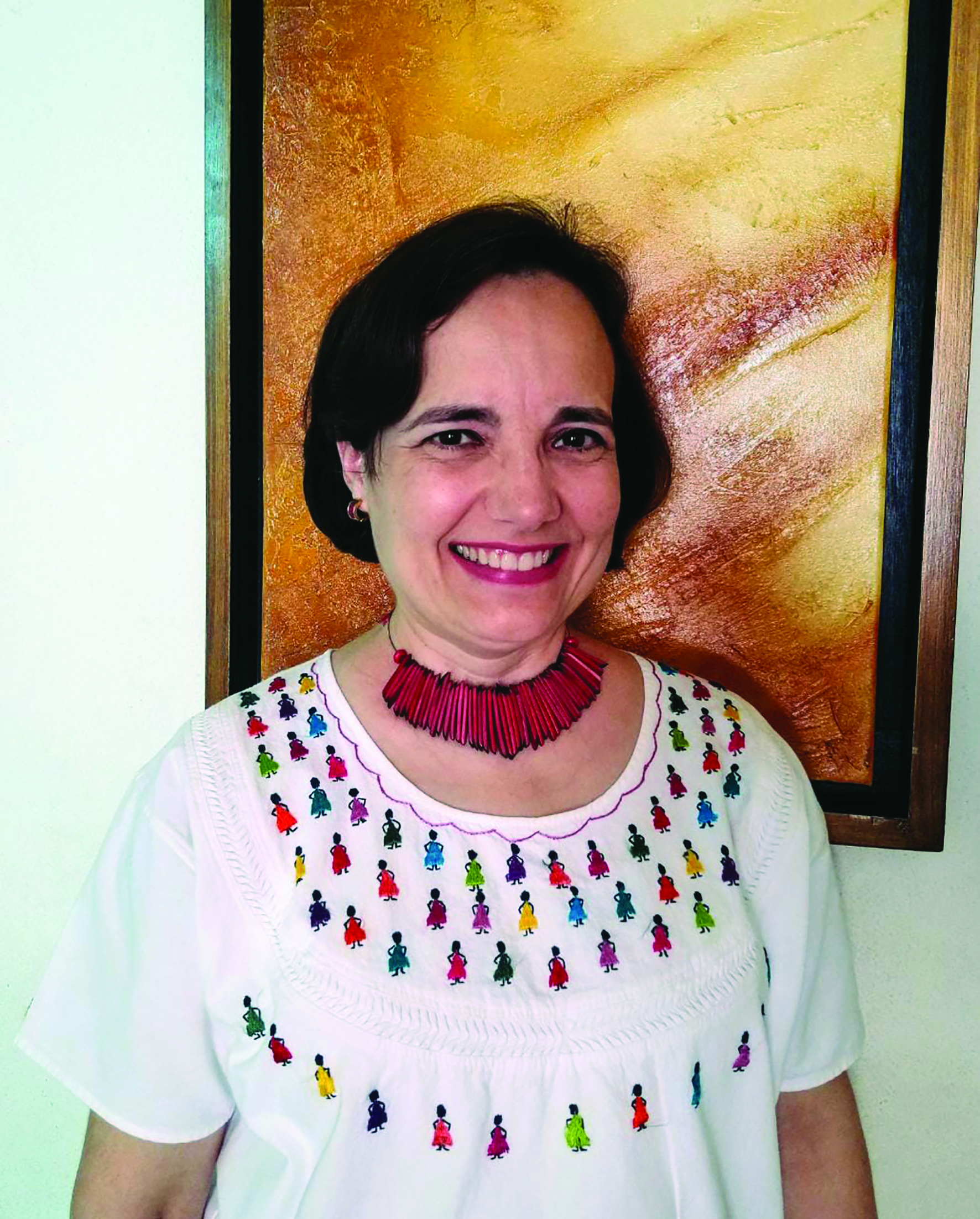
Elda Nelly Treviño
Dr. Treviño is a pianist and Dalcroze Eurhythmics (DE) practitioner and researcher. She is a professor and coordinator of Programas Dalcroze at the Universidad Panamericana in México City. Alongside she is a professor at the Facultad de Música of the Universidad Autónoma de Nuevo León (UANL) in Monterrey, and director of her independent studio “Música Viva”. As active promoter of DE throughout Latinamerica, Elda Nelly frequently serves as guest lecturer, and clinician in DE and piano pedagogy. Up to the present she serves as a member of the publications committee of the Dalcroze Society of America in the US, and as a representative of the FIER in México. In addition, she is active as a collaborative pianist. Dr. Treviño holds a Ph.D. in Psychology from the Universidad Autónoma de Nuevo León, Bachelor and Master of Music in Piano Pedagogy from the University of Texas at Austin, Dalcroze Certificate and License from Carnegie Mellon Univeristy.
Anatomy of a Lesson #8
“A Melody in Minor” by Anne Clàire Rey-Ballet
Verónica Jiménez Queasada, Author
Elda Nelly Treviño, Editor
Anne-Claire Rey Bellet, Composer
-
Anatomy of a Lesson #8 © 2026 by Verónica Jiménez Queasada, Elda Nelly Treviño, Anne-Claire Rey Bellet is licensed under CC BY-SA 4.0


About the Author(s)
Elda Nelly Treviño
Dr. Treviño is a pianist and Dalcroze Eurhythmics (DE) practitioner and researcher. She is a professor and coordinator of Programas Dalcroze at the Universidad Panamericana in México City. Alongside she is a professor at the Facultad de Música of the Universidad Autónoma de Nuevo León (UANL) in Monterrey, and director of he…


Leave a Reply
You must be logged in to post a comment.