
Article / Essay
Dalcroze for Healthy Aging
A Community-Based Research Project

Published Fall 2026 | Added November 10, 2026
Elda Nelly Treviño describes a longitudinal research study examining how Dalcroze eurhythmics can support the cognitive, physical, emotional, and social well-being of older adults.
This project is led by Dr. Gilles Comeau, director of the Music and Health Research Institute of the University of Ottawa (MHRI) and is funded by the Social Sciences and Humanities Research Council of Canada (SSHRC) with contributions from partner organizations such as the Music and Mental Health Research Clinic at the Royal, the Bruyère Health Research Institute, and the Institut Jaques-Dalcroze in Geneva, Switzerland.
The overall goal of this initiative is to examine the benefits of a community-based music movement program (COMM) based on Dalcroze eurhythmics interventions on psychosocial conditions of older adults facing mental illness, cognitive impairments (such as dementia), physical declines (including frailty), and social isolation, thereby improving their quality of life. The human domains addressed in this research project are the cognitive, physical, affective, and social.
This longitudinal, seven-year research project is considered a “living laboratory” and was developed by multiple team members (Dalcroze practitioners and researchers) with sites in Canada, the United States, Mexico, Switzerland, the United Kingdom, South Korea, Japan, and Australia. Among the expected outcomes of this partnership grant project is the production of a scholarly and practice-oriented book with a historical and contemporary perspective on the subject.
In January of 2026, I was invited by Dr. Gilles Comeau to join the research team of the aforementioned project. My first experimental group as a team member was at a venue in Monterrey, Nuevo León, México, within the association AMA y Trasciende, A.C., which is an independent initiative of older adults in action. Through this association, I worked on a ten-session, weekly intervention using Dalcroze eurhythmics. Below, I present a general outline of my weekly work with this group.
Dalcroze Activities for Older Adults
View Elda Nelly Treviño’s outline for working with these older adults.
Submit Feedback on This Resource
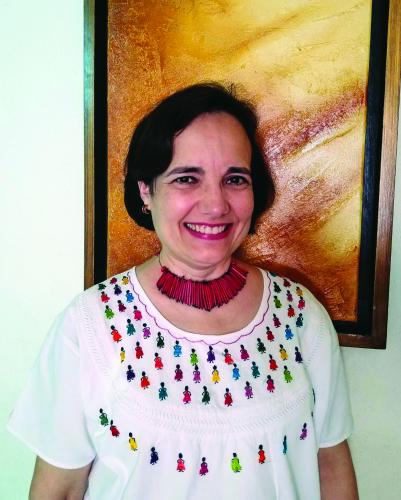
Elda Nelly Treviño
Dr. Treviño is a pianist and Dalcroze Eurhythmics (DE) practitioner and researcher. She is also a professor and coordinator of Programas Dalcroze at the Universidad Panamericana in México City. Alongside she is a professor at the Facultad de Música of the Universidad Autónoma de Nuevo León (UANL) in Monterrey, and director of her independent studio “Música Viva”. As an active promoter of DE throughout Latinamerica, Elda Nelly frequently serves as guest lecturer, and clinician in DE and piano pedagogy. Up to the present, she serves as a member of the publications committee of the Dalcroze Society of America in the US, a member of the scientific committee of ICDS, and as a representative of the FIER in México. In addition, she is active as a collaborative pianist. Dr. Treviño holds a PhD in psychology from the Universidad Autónoma de Nuevo León, a doctorate in harmony from Universidad Tito Puente, bachelor and master of music in piano pedagogy from the University of Texas at Austin, Dalcroze Certificate and License from Carnegie Mellon Univeristy.
About the Author(s)
Elda Nelly Treviño
Dr. Treviño is a pianist and Dalcroze Eurhythmics (DE) practitioner and researcher. She is also a professor and coordinator of Programas Dalcroze at the Universidad Panamericana in México City. Alongside she is a professor at the Facultad de Música of the Universidad Autónoma de Nuevo León (UANL) in Monterrey, and director …
Comment
Leave a Reply
You must be logged in to post a comment.


The last ten weeks I have been working with a group of older adults in Monterrey, México as part of this research project, has been very rewarding. It has called my attention the fact that the participants want to know in detail what the exercises are for and they are interested in knowing if they do the exercises “well enough” or accurately. We are having a great time remembering popular songs and bringing memories to life about that music.