
Book
Eurhythmics Art and Education
Published 1930 | Added October 16, 2026
A collection of essays by Émile Jaques-Dalcroze exploring embodied musical understanding through movement, illustrated with lithographs depicting eurhythmics exercises.
The edition linked here was translated from the original French by Frederick Rothwem and edited and prepared for the press by Cynthia Cox.
Chapters
Eurhythmics
- The Nature and Value of Rhythmic Movement (1922)
- The Technique of Moving Plastic (1922)
- The Inner Technique of Rhythm (1925)
- Physical Technique and Continuous Movements
Education
- General Education and Rhythmic Movement
- Rhythm in Musical Education
- The Piano and Musicianship (1925)
- Eurhythmics and the Education Op the Blind
- Music and Solidarity (1924)
- Unity in Musical Education (1922)
- The Musical Education of the Future (1922)
Art
- Eurhythmics and Art (1925)
- The Cinema and Its Music (1925)
- The Lyric Theatre and the Public (1922)
General
- Rhythm and Folk-Song (1925)
- Art and Criticism (1922)
- Style and the New Spirit (1922)
- Musical Art and the Public (1922)
- Balance
- Contradictions and Inconsistencies (1922)
- Waiting for Reforms (1922)
Attachments
Submit Feedback on This Resource
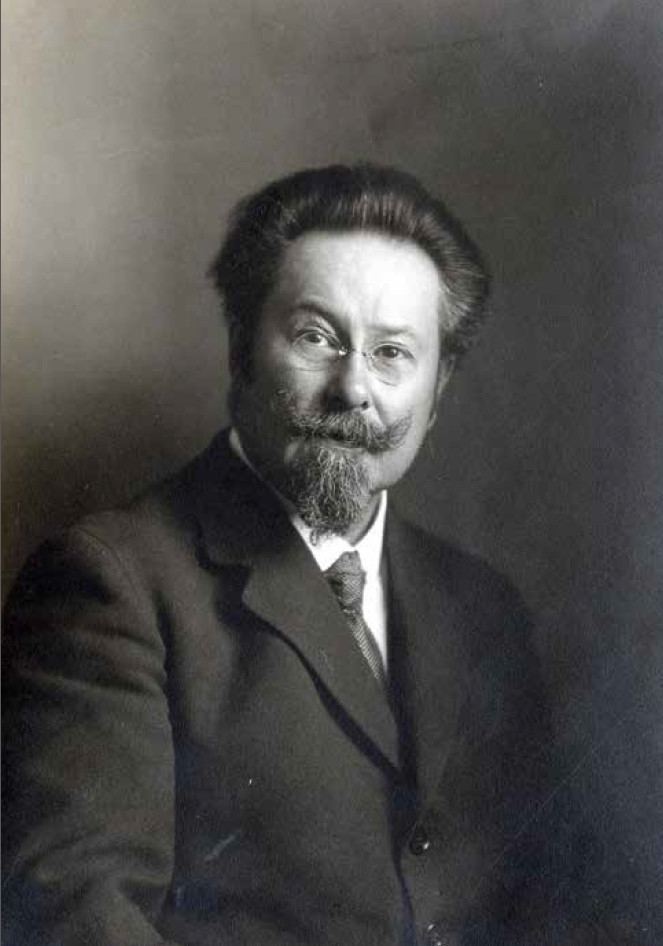
Émile Jaques-Dalcroze
Émile Jaques-Dalcroze was a Swiss composer, educator, and developed Dalcroze eurhythmics.
While teaching music at the Geneva Conservatory, he observed that his students lacked essential musical skills. They could not actually hear the music and harmonies they were writing. When they performed, their playing showed little sense of rhythmic life.
He began to devise ear training games to develop better inner hearing. These games honed the students’ perceptions and resulted in more sensitive music-making: timing, articulation, tone quality, and phrase shape. Dalcroze noticed his students would exhibit subtle, spontaneous movements—swaying, tapping a foot, a slight swinging of the arms—as they sang. The body was conscious of the life and movement of the music.
Jaques-Dalcroze began to explore these natural, instinctive gestures. He invited students to walk and swing their arms, or to conduct while they sang or listened to him improvise at the piano. He called this study of music through movement “eurhythmics,” from the Greek roots “eu” and “rythmos” meaning “good flow.”
Jaques-Dalcroze continued to experiment with eurhythmics, giving demonstrations of his “Rhythmic Gymnastics” throughout Switzerland and Western Europe. In 1911, he founded a school in Hellerau, Germany, where he refined his pedagogical methods and mounted innovative theatrical productions informed by these newly developed aesthetic principles.
These “festivals” drew audiences that included many of the leading thinkers of the day, including Rudolf von Laban, Darius Milhaud, Serge Rachmaninoff, Rainer Maria Rilke, and many others. By the time he left Germany in 1914, his work had created an international sensation.
In 1915, he founded the Institut Jaques-Dalcroze in Geneva, Switzerland where he continued to develop fresh applications of his approach until his death in 1950. The school continues to train new instructors who have, in turn, established training schools internationally.
Today, people from around the world study this remarkable method of music education and experience.
About the Author(s)
Émile Jaques-Dalcroze
Émile Jaques-Dalcroze was a Swiss composer, educator, and developed Dalcroze eurhythmics.
While teaching music at the Geneva Conservatory, he observed that his students lacked essential musical skills. They could not actually hear the music and harmonies they were writing. When they performed, their playing showed little…


Leave a Reply
You must be logged in to post a comment.