Dalcroze Connections is the official magazine of the United States Dalcroze community and seeks to inform, inspire, and educate Dalcroze practitioners at all levels.
Movement as the Means for Learning Arthur Simoes and Katie Couch explore how embodying music through movement deepens learning and musical understanding. They also offer practical insights into kinesthetic learning and the role of movement in Dalcroze teaching.
Recommendations for Eurhythmics Teachers In this new translation of a 1948 text, Jeremy Dittus reflects on the lasting relevance of this human-centered pedagogy through thirty-nine concise insights from Émile Jaques-Dalcroze himself.
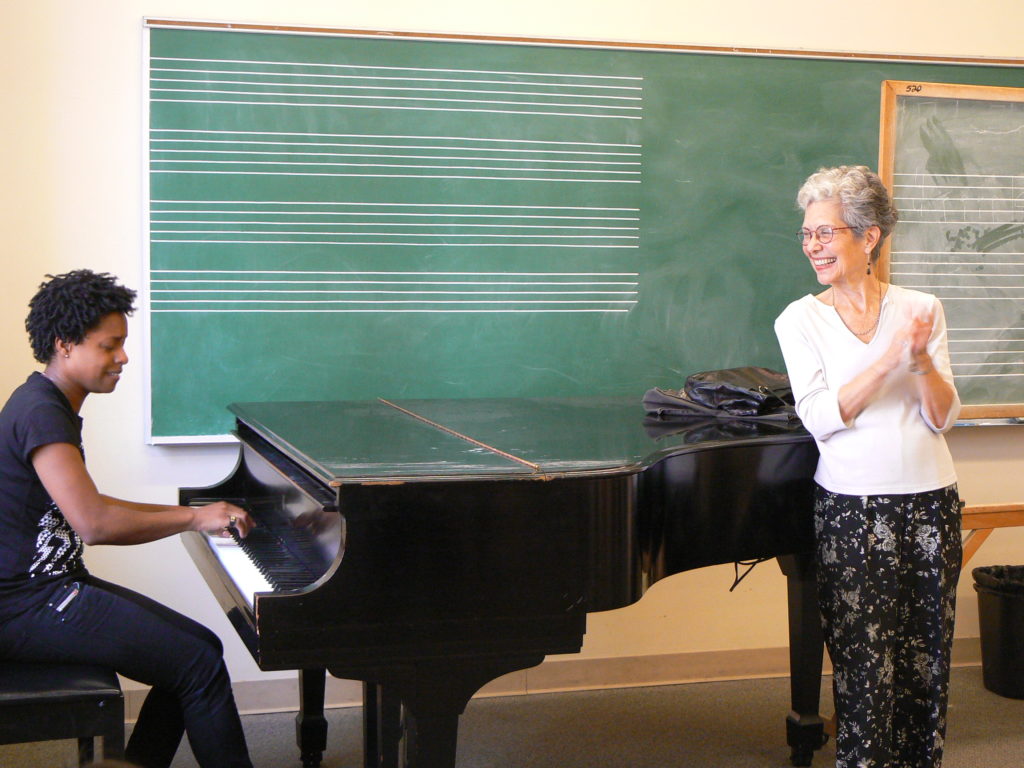
You may have read in the latest issue of Dalcroze Connections the memories that Dalcrozians shared of their time studying and collaborating with Anne Farber, one of the most formidable Dalcroze educators of our generation. One of the few American holders of the diplôme supérieur, she was the director of the New York Dalcroze School and taught and presented at numerous music institutions around the world.
To continue these remembrances, the DSA is reposting a video in which people discuss their memorable moments and Dalcroze experiences with Anne. Originally hosted by the Virtual Dalcroze Meet-up (VDM) in 2023, this video features commentary by Stephen Neely, Aaron Butler, Greg Ristow, Leslie Upchurch, and Cynthia Lilley.
https://www.youtube.com/watch?v=jug3sMr-nPk
Thanks to VDM for allowing us to repost this video!
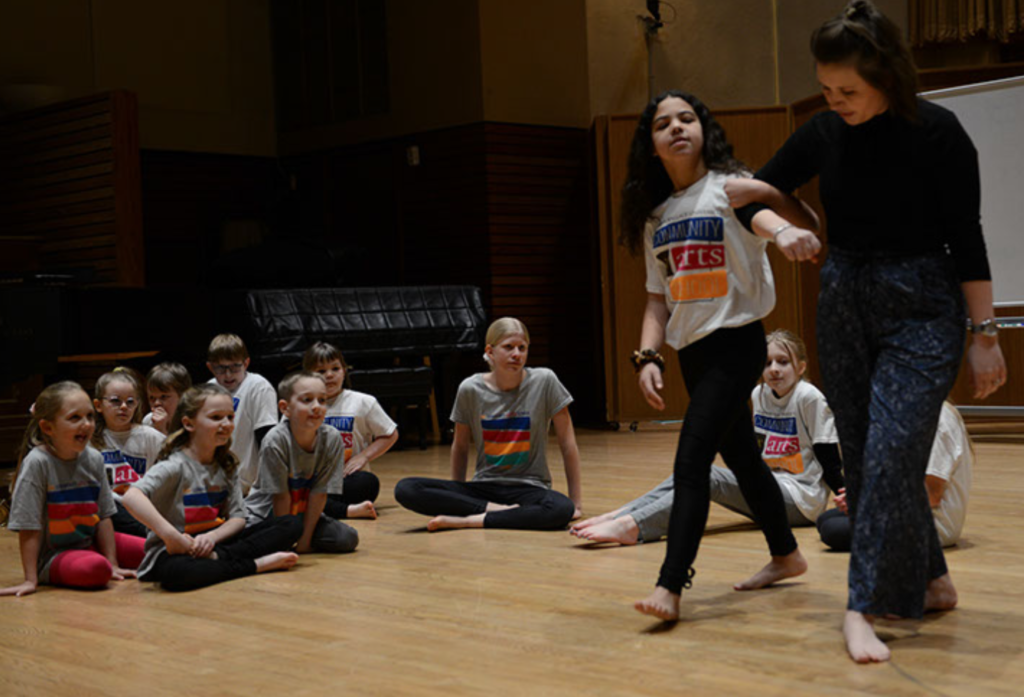
Anne worked with students of all ages throughout her career. Below is a short video of Anne Farber teaching children in NYC at the Lucy Moses School was filmed and edited by Mattie Kaiser in 2014; that video is here for your perusal:
https://www.youtube.com/watch?v=EOEditUWK54
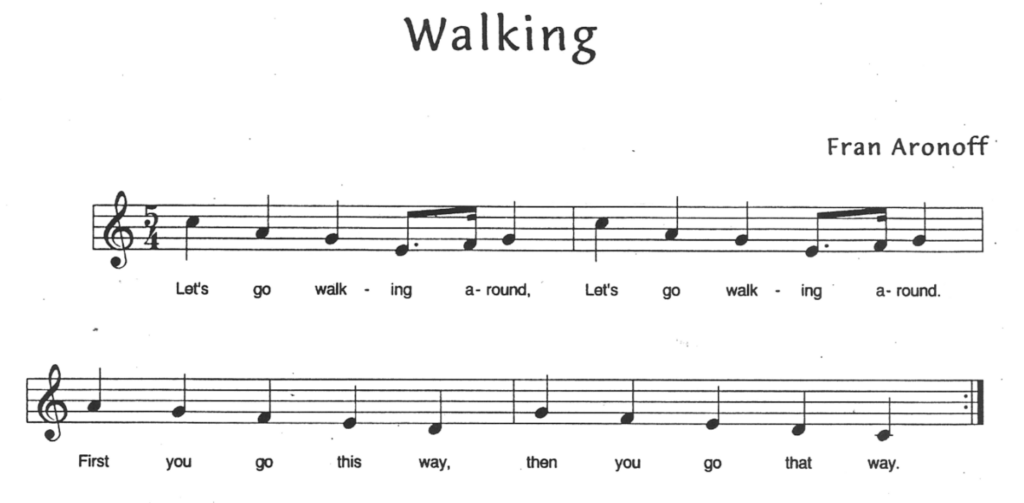
Finally, in 2016 the New York chapter of the DSA published a collection of Anne’s original music. Some of these pieces and songs were used in teaching Dalcroze music concepts, along with other music that exists simply for music’s sake. The forward, by Aaron Butler, appears here:
Throughout her career, Anne wrote original music and arrangements for her lessons and classes. Many of us lucky enough to study with her have cherished the hand-written copies of her music, hoping never to lose them. Now, with the creation of this volume, we can easily teach, share, and perform all of Anne’s incredible work. We recognize that this is only a preliminary collection. More compositions will doubtless surface and be included in subsequent editions.
Anne’s music is so important because she, as a teacher, is so artistic. Her pieces brilliantly combine a pedagogical offering and a musical offering. Anne’s teaching and her musicianship are inseparable: at her most pedagogical, she was most musical; at her most artistic, we all learned.
You can find copies of this publication still for sale.
If you have any memories or content of Anne that you’d like to share, please leave us a comment below!
Have you ever watched a DALCROZE LAB? This is a virtual forum provided by the Dalcroze Society of America for educators to explore Dalcroze Education. It offers both live seminars and on-demand recordings of past presentations. These resources allow participants to delve into the principles, pedagogy, and techniques of Dalcroze education, including workshops, Q&A sessions, and study discussions.
In addition to the seminar and Q&A with master teachers, many DALCROZE LABs also give you access to video from in-person workshops and study guides featuring musical examples and activity descriptions.
The DSA is proud to host its first DALCROZE LAB of 2025 on Saturday, May 31 with master teacher Françoise Lombard. Participants can either stream the event (7:00-8:30p ET) or watch asynchronously on their own time.
In her session, Françoise Lombard (diplômé) will explore how to meaningfully connect music, movement, and pedagogy using recorded music. Participants will learn how to select and integrate recorded musical examples with attention to dynamics, articulation, phrasing, and musical cues—all within a Dalcrozian approach that supports responsive and embodied learning.
Additionally, selected recordings of past DALCROZE LAB presentations are available in the Dalcroze USA Online Store.
We hope you can join us for this meaningful event!
The spring 2025 edition of our online magazine Dalcroze Connections is now available for all to read!
Dalcroze Connections is the official magazine of the United States Dalcroze community and seeks to inform, inspire, and educate Dalcroze practitioners at all levels. It is published twice yearly, and prepared by the Publications Committee. This issue was led by managing editor Katie Couch.
Read Vol. 9 No 2
The online edition is available as a free PDF download in our store, or you can request a hard copy to be mailed to you. (Free for Dalcroze USA members—requests must be received by May 27, 2025.)
Let us know what you think!
Features
Systemizations
Jeremy Dittus
Imagination, Improvisation, and Invention
Michael Joviala
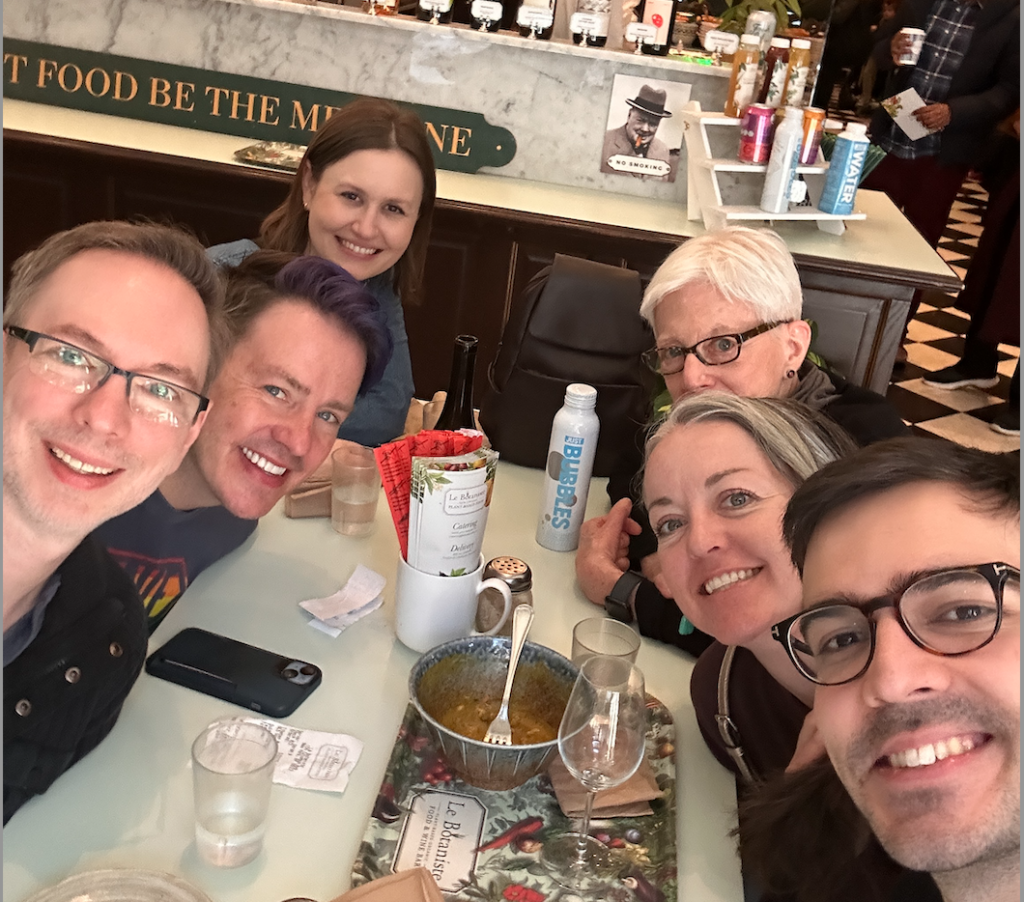
The recent professional development committee (PDC) conference held in Manhattan was unforgettable. In the short space of just a weekend, the Dalcrozians who attended were able to experience a wide variety of activities, games, repertoire pieces, and more. We kicked off the conference with a Friday night dinner meeting consisting of Chinese takeout, repertoire sharing, and a session (presented by Dalcrozian Sarah Schreffler) on Critical Response Process: a formula for giving constructive feedback in a safe and straightforward manner. Learning the steps for sharing feedback was a great way to kick off the weekend, which was one of the most ‘safe spaces’ I’ve ever encountered in a high-level Dalcroze situation.
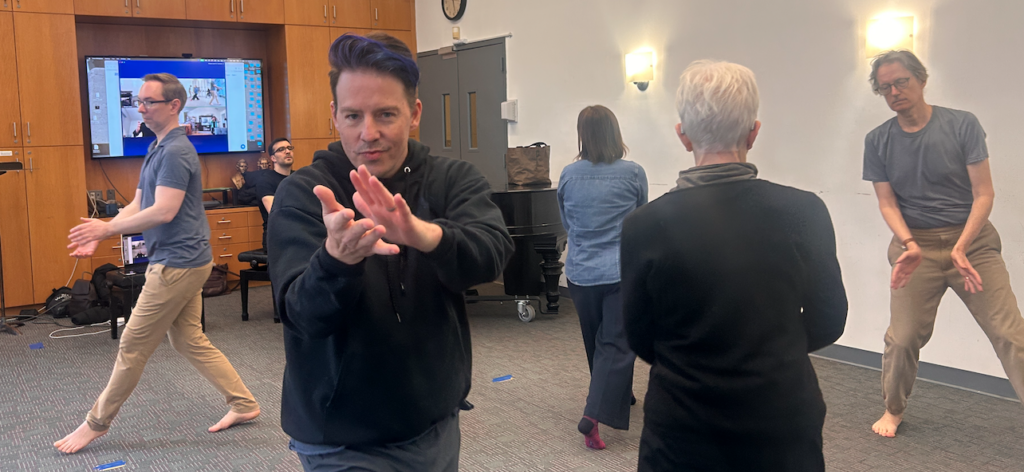
Our sessions over the weekend were varied, with each of the attendees presenting on a topic at least once. ‘Wonderful’ can’t even describe the feeling of being with high-level Dalcroze colleagues as we gleefully participated in each other’s canons, systemizations, follows, and more. Even though the sessions were all on different topics, I found connections to be made throughout, including the idea of teaching/reinforcing nuance at every stage of the Dalcroze process (from the eurhythmics hall to the improv lesson to sight-singing exercises…).
This event was historic for our community in that several teacher-training program directors were able to share elements of their professional studies exams. We didn’t necessarily give each other feedback but rather were able to notice what was similar and what was different about each exam; reflecting the bonds that tie us all together (e.g., compound meter continuous canons) as well as the differences that make us unique (e.g., how to test students on their ability to perform dissociations). As far as I know, various US-based leaders of teacher-training programs had never met in this fashion before to discuss their curricula.
The first-ever DSA professional development conference was incredibly useful, inspiring, and uplifting. Before we even ended the weekend, we started to discuss when we can repeat this type of gathering. Looking forward to it, as our community begins to truly ‘move together!’
What follows below are the reflections of other retreat attendees:
It was valuable in so many ways.
Thanks to those of you who created the agenda – it was thoughtfully planned with a near perfect mix of discussion and demonstration. Downtime for meals was appreciated, too. Thanks specifically to Michael for solving the housing puzzle and dealing with the Lucy Moses school – which in turn deserves our gratitude.
It turns out that being together in person is quite a different experience than gathering through zoom boxes. We’re good people to be with!
I was constantly intrigued by the variety in what we present, how we present, and what we particularly value, creating a remarkable tapestry. Viva les differences! And having Sarah Shreffler’s procedure to guide us no doubt helped us navigate graciously.
Dealing with canons, follows, improvisation added to my store of possibilities, and the Dropbox compendium of wonderful pieces and materials will be invaluable. I was sorry to have to miss the systemization presentations. I’m adding one of mine to the Dropbox.
I’m so glad we got one full Eurythmics lesson, and Arthur’s was brilliant. He is one welcome addition.
Sharing our Level 1 Eurhythmics tests gave us a chance to see our similarities and also, at the more microscopic level, our differences. Let’s try to share Solfege and Improv tests as well. Even more valuable for me was the general discussion that followed after lunch on how to attract more folks to our challenging/rewarding approach.
I did find Saturday long enough to be exhausting for me – reflecting my own stamina limits – but I can see that we needed virtually every minute to cover so many areas.
Congratulations and best wishes to all of us.
Cynthia Lilley
The 3 days of sharing and dialogue were rich with both ideas and camaraderie. Presentations were not generally finished projects but were filled with questions and looking for advice or ideas.
The Eurhythmics topics we explored were traditional including follows and canons. Hearing others play for them was a great way to self evaluate our own playing. Being able to analyze what worked well and discuss it was the highlight of these experiences. Everyone was curious and supportive which is an optimum group experience.
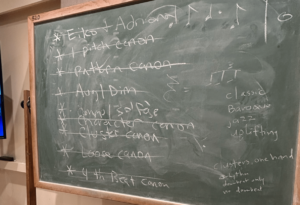
I particularly enjoyed canons. I am thrilled to now have the list of canons. I was introduced to some that were new for me to do in a class such as 4th beat canon and augmentation/ diminution canon. I will definitely be adding these to my teaching.
Finally, I have a bad knee so movement is not always something I can do well. But I found ways to engage without optimum mobility. I am quite empathetic to students with limitations so it was good for me to experience being in challenging classes with my empathetic colleagues as teachers.
Leslie Upchurch
I was glad to attend a partial of the retreat. Thank you for inviting me.
The biggest impact on me was that the DSA community has made a huge cornerstone launching the 1st retreat which demonstrated the organization is willing to embrace Growth Mindset concept. There were new ideas which for many of us had never studied in depth during our previous trainings were shared by committee members. I saw the discovery moment, risk taking(in a good way,) adaptation, courage, trust with others.
The idea of including “critical response” presented by Sarah into the retreat was a good plus. We may not be bought into the approach fully but it gave us a chance to hear from others and to know what is happening beyond Dalcroze and how we can highlight some of these ideas in individual’s work. I hope a session like this will continue to be programmed in the future.
Challenge: it’s a good start and how to continue this great intention to run the yearly retreat moving forward. Be patient with the changes, conflicts arises among us due to various factors and viewpoints and how to find a reachable solutions to resolve these issues demonstrated an empathic attitude towards each other( teacher to teacher & teacher to student.) The balance among tradition, innovation, music, sensation, connection and others …..
I haven’t been in the professional teacher training level for many years and my certain skills were rusty but I was able to find joy in doing these activities with all in a musical way which made sense to me but not on a mechanical technical way.
Bravissimo!!
Mimi Hsu
I was inspired by the Eurhythmics exam sharing session, where we led the level 1 exam of our respective programs. It was so beautiful to see, with all the diversity in our teaching, how deeply interconnected and similar we are.
Arthur Simoes
The PDC hopes that in future leadership retreats, more Dalcroze teacher-trainers will be able to join us! The DSA thanks the many Dalcroze educators who have changed lives through their work. Please, tell us about the educators who have inspired you or consider a donation to the DSA to support their legacy.
The spring 2025 edition of our online magazine Dalcroze Connections is now available for all to read!
Dalcroze Connections is the official magazine of the United States Dalcroze community and seeks to inform, inspire, and educate Dalcroze practitioners at all levels. It is published twice yearly, and prepared by the Publications Committee. This issue was led by managing editor Katie Couch.
Read Vol. 9 No 2
The online edition is available as a free PDF download in our store, or you can request a hard copy to be mailed to you. (Free for Dalcroze USA members—requests must be received by May 27, 2025.)
Let us know what you think!
Features
Systemizations
Jeremy Dittus
Imagination, Improvisation, and Invention
Michael Joviala
The Dalcroze Education for Youth Subcommittee is comprised of members of the DSA’s Professional Development Committee. We (Adriana Ausch, Jeremy Dittus, Leslie Upchurch, and myself) have been meeting to discuss and organize common goals for Dalcroze students in the 4-7 year old age range.
While our meetings began a few years ago with a literature review of other Dalcrozian publications about working with this age group, we quickly found that there could be quite a bit more current resources for Dalcroze teachers of 4-7 year olds.
Music/Movement Goals
One aspect we have started to organize is feasible music and movement goals for Dalcroze students aged 4-7. The following is a list of goals based not only on our literature review but also on our personal experiences in working with this age group:
Locomotor Movements (Continuous Movements)
Beats and/or medium tempi
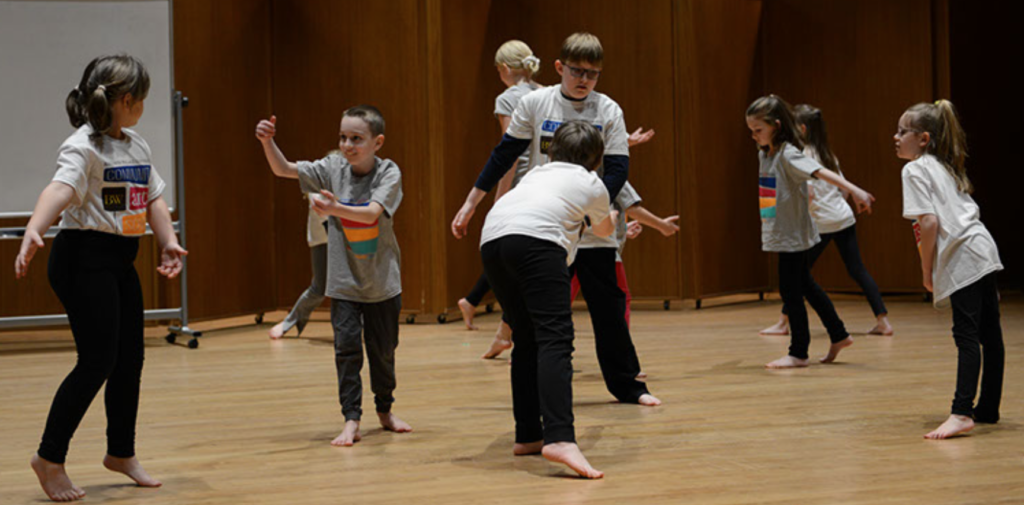
Walk, march, step, etc.
Divisions and/or faster tempi
Run, tiptoe, trot, jog, prance, les cloche-pieds (step-hop), etc.
This is not a comprehensive list for Dalcroze practitioners; our goal in creating this was simply to give newly-certified teachers a place to begin when searching for movement inspiration in their lessons with 4-7 year olds. One of the great aspects of Dalcroze work is that it is constantly evolving, and this list can surely evolve as well. Do you have any comments or suggestions? Please leave a comment below if so!
Database of Activities
Another big component of our work is in creating a database of activities for 4-7 year old Dalcroze students. We have recently created a form in which veteran Dalcroze teachers (those who hold at minimum the Professional Certificate and have taught 4-7 year olds for a number of years) are asked to share detailed exercises for this age group. The collection of activities can be sorted by area (eurhythmics, solfège, improv, Plastique Animée, etc.), Dalcroze principle (including body as instrument, active listening, social interaction, and more), and Dalcroze teaching strategy (including association, inhibition/incitation, systemization, and more), among other factors.
As we collect activities from our community, we will build them into a searchable database for DSA members. The goal is for one to be able to search by area, principle, strategy, or other elements. The activities that one might discover could include specific verbal directions, a score or recording, or even an image. It all depends on the data that we collect from our veteran teachers!
We aim to release the first version of this database in January 2024, and will be sure to update the DSA community as we work towards this exciting members-only resource!