
Dissertation / Thesis
A Qualitative study of Dalcroze Eurhythmics Classes for Adults
Published 1995 | Added September 27, 2026
Detailed summaries of four eurhythmics classes for adults that demonstrate teaching various rhythmic subjects, phrase, and form through movement, followed by an interesting discussion on the pedagogy.
Abstract
Dalcroze eurhythmics is an approach to music education which is grounded in music and natural movement; from these elements arise concerns with process, measuring and personal expression which endow the discipline with a qualitative feel.
Emile Jaques-Dalcroze did not give complete directions for promulgating his methods; Dalcroze teachers acquired skills in the classroom as students. The lack of written information about eurhythmics classes is a refrain which appears in many writings on Dalcroze. Using qualitative methods of research, my goal in this study was to distill some of the essential qualities of Dalcroze eurhythmics lessons as experienced by its students and teachers.
At the outset of this study, I observed and video-taped four Dalcroze eurhythmics lessons for adults, each given by a master teacher. Chapters IV through VII are devoted to descriptions of the lessons, followed by my reflections on each lesson. Chapters VIII and IX are based on interviews with teacher and student respondents; in each chapter are presented analyses of significant themes which emerged from the data.
Through the analysis and synthesis of themes which emerged from the interviews and from my theory observations, three over-arching themes emerged. These meta-themes are discussed as characteristics of the four Dalcroze lessons; they are seen against similarities and differences in observations made by teacher and student respondents and by me, and are considered in light of related literature, including works by Dalcroze.
The three over-arching themes that head the following sections are: Theme I: Teaching in these Eurhythmics Classes Was Student-Centered, Indirect, Supporting the Independence of the Students; Theme II: The Eurhythmics Lessons Were Characterized By a Cyclical and Spontaneous Flow From Idea Into Action Into Idea; Theme III: The Educational Ideal of Aesthetics Was Realized in these Classes.
Attachments
Submit Feedback on This Resource
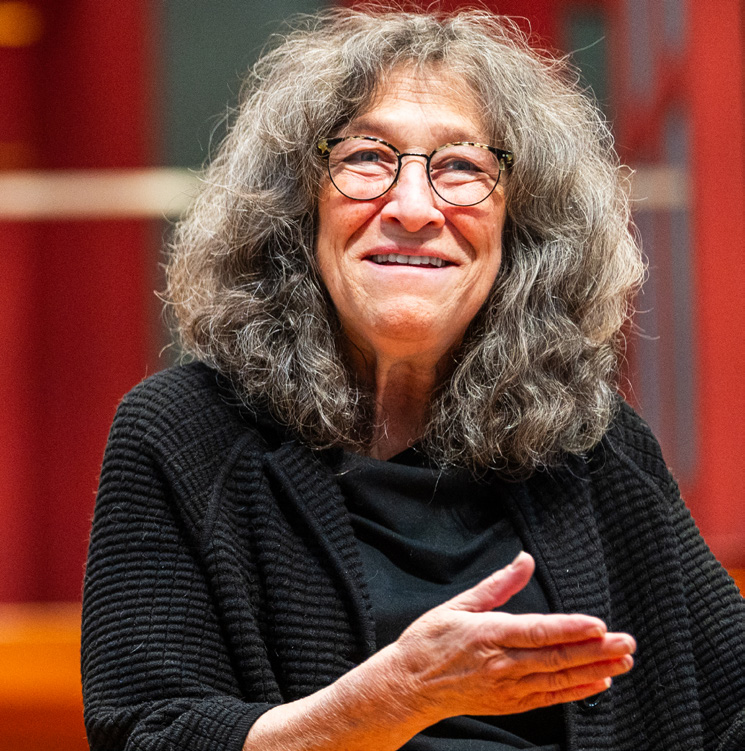
Ruth Alperson
Ruth Alperson (BA Music, Oberlin College; piano, Emil Danenburg; harpsichord, David Boe.) Eurhythmics classes with Inda Howland at Oberlin inspired Ruth to pursue studies in the discipline, the beginning of a lifelong journey. She studied at the Dalcroze School of Music, New York City, and the Dalcroze Teachers Training Course in London, England. Studies at the Institut Jaques-Dalcroze culminated in being awarded the diplôme supérieur. Ruth earned her PhD in arts and humanities at New York University. Ruth’s doctoral dissertation was titled “A Qualitative Study of Dalcroze Eurhythmics Classes for Adults.” She has held the following titles: Dean, the Hoff-Barthelson Music School in Scarsdale, NY, Director of Studies of the Dalcroze Teacher Training Program; faculty, the Dalcroze Program at the Diller-Quaile School of Music; member, Scientific Committee of the International Con ference of Dalcroze Studies (ICDS); DSA Board of Trustees, member of the governance committee. Ruth taught for many summers at the Dalcroze Institute at Longy, where she learned from brilliant Dalcroze teacher, friend, and mentor Lisa Parker.
About the Author(s)
Ruth Alperson
Ruth Alperson (BA Music, Oberlin College; piano, Emil Danenburg; harpsichord, David Boe.) Eurhythmics classes with Inda Howland at Oberlin inspired Ruth to pursue studies in the discipline, the beginning of a lifelong journey. She studied at the Dalcroze School of Music, New York City, and the Dalcroze Teachers Training Cou…


Leave a Reply
You must be logged in to post a comment.